Opening Google for a quick search usually takes only a few seconds. But in 2010, millions of visitors opened the homepage and found something completely different. Instead of a regular Google logo, they saw a playable Pacman maze. The interactive experience let users control the famous yellow character directly from the search page.
The Pac-Man 30th anniversary gave Google an opportunity to celebrate one of gaming’s most recognizable characters in an unusual way. Rather than creating a simple anniversary logo, Google turned its homepage into a game. Visitors could collect dots, avoid ghosts, eat power pellets, and chase high scores without leaving the page.
The experience also introduced a two-player mode featuring Ms. Pac-Man. That feature gave friends and family a chance to play together.
For longtime gamers, the Doodle brought back memories of classic arcades. For younger users, it offered an easy introduction to a legendary arcade game.
But why did this particular Google Doodle become so memorable? Its story combines gaming history, nostalgia, clever design, interactive technology, and Google’s understanding of user engagement.
Why Did Google Celebrate Pacman’s 30th Anniversary?
Pac-Man first appeared in Japan in 1980. The game quickly grew from an arcade attraction into a global entertainment phenomenon.
Its concept remained remarkably simple. Players controlled Pac-Man through a maze while collecting dots and avoiding four ghosts. Power pellets gave players a temporary advantage and allowed Pac-Man to chase the ghosts.
That simple formula made the game easy to understand but difficult to master.
Thirty years after Pac-Man’s original release, Google decided to celebrate the milestone with something more engaging than a standard logo. The company created an interactive Doodle that recreated the basic arcade experience inside the Google homepage.
Google launched the Doodle on May 21, 2010. The company described it as its first playable Google Doodle.
The timing made sense. Pac-Man already had enormous recognition across different generations. Many older users remembered playing the game in arcades, while younger audiences knew the character from games, television, merchandise, and popular culture.
Google used that recognition to create an experience that required almost no explanation.
Users could simply see Pac-Man, understand the objective, and start playing.
How Did the Google Doodle Turn the Homepage Into a Game?
The biggest attraction of the Pac-Man 30th anniversary celebration was its interactive design.
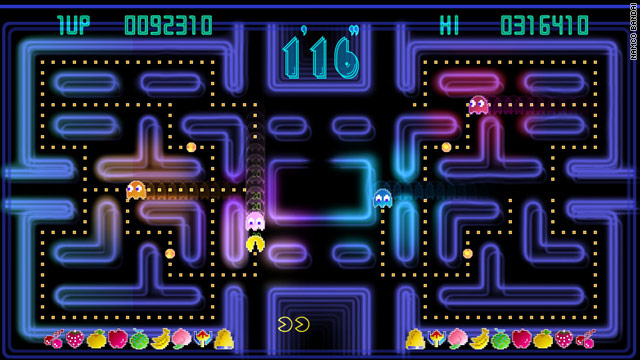
Google replaced its usual static logo with a playable maze. The maze incorporated the Google name while maintaining the paths Pac-Man needed to move through the game.
Visitors could control Pac-Man and guide him around the maze. The objective remained familiar: collect dots, avoid ghosts, use power pellets, and survive as long as possible.
Google also changed the usual “I’m Feeling Lucky” button. It became an “Insert Coin” button that players could use to start the game.
If visitors waited without clicking, the game could also begin automatically.
This small change created a completely different homepage experience.
Instead of visiting Google, completing a search, and leaving, users suddenly had a reason to stay and interact.
The Doodle also made the experience accessible to people who had never played Pac-Man before. The controls were simple, and the objective required little explanation.
That combination helped turn a familiar search page into an unexpected arcade experience.
What Made the Pacman Doodle So Special?
Google had already built a reputation for changing its logo to celebrate important events and cultural moments. However, most traditional Doodles remained visual experiences.
The Pac Man Doodle changed that approach.
It did not simply show Pac-Man. It allowed users to play Pac-Man.
Google recreated important parts of the original game, including its maze, characters, ghost behavior, sounds, and gameplay mechanics. The company even worked to preserve some quirks from the original arcade version.
That attention to detail mattered to longtime fans.
A basic maze with a yellow character would not have created the same nostalgic feeling. Google wanted the experience to feel close to the classic Pac-Man game that players already knew.
At the same time, the Doodle remained simple enough for casual users.
This balance became one of its strongest qualities. Experienced players could enjoy the familiar mechanics, while first-time players could quickly understand what to do.
The result was a digital experience that appealed to both nostalgia and curiosity.
Can You Play Pacman With Another Player?
Yes. Google added a two-player feature that made the anniversary Doodle even more engaging.
Players could click the “Insert Coin” button twice to activate the second-player mode. Ms. Pac-Man then joined the maze.
The first player controlled Pac-Man with the arrow keys. The second player controlled Ms. Pac-Man with the WASD keys.
This feature turned the homepage game into a shared experience.
Two people could sit at the same computer and play together. Friends could compete, family members could take turns, and coworkers could challenge each other during a quick break.
The addition of Ms. Pac-Man also expanded the nostalgia factor.
Ms. Pac-Man had already established herself as an important character in arcade gaming. Bringing her into Google’s interactive Doodle gave users another familiar character to control.
More importantly, the two-player mode showed that Google wanted visitors to interact with the Doodle rather than simply look at it.
How Could People Play Pacman Online?
The Doodle offered a simple way to enjoy online Pacman without downloading a separate application.
Users could open Google and interact with the game directly from their browser. They did not need a gaming console or special software.
That accessibility helped the experience reach a much wider audience.
The idea of playing a classic arcade title online also made the Doodle especially convenient. A person who remembered Pac-Man from an arcade could revisit the experience from a computer.
New players could also discover the game without searching for an arcade machine or buying an old gaming system.
The browser-based format removed those barriers.
Google effectively placed a small arcade game inside a website that people already visited every day.
That approach helped demonstrate how online experiences could bring classic entertainment to new audiences.
Why Was Pacman Already So Popular?
Pac-Man’s popularity came from more than its colorful character.
The original arcade game offered an unusual alternative to many early video games. Players did not need to shoot enemies or control complicated machines. Instead, they navigated a maze and made quick decisions while enemies followed them.
The game’s four ghosts also added strategic depth.
Blinky, Pinky, Inky, and Clyde each had different movement patterns. Players could learn those patterns and use them to plan their routes.
The game became increasingly difficult as players progressed.
That combination created a simple learning curve. New players could understand the basics immediately, while experienced players could spend hours improving their skills.
Pac-Man also crossed cultural and demographic boundaries.
The character became recognizable outside gaming. People encountered Pac-Man through merchandise, television, advertising, toys, and other forms of entertainment.
By the time Google celebrated the game’s 30th birthday, Pac-Man had already become a cultural icon.
That recognition made the character an ideal choice for a Google Doodle.
How Did the Doodle Recreate the Classic Arcade Experience?
Google’s developers paid close attention to the original game.
The Doodle reproduced several recognizable elements from the classic experience. Players could move through the maze, collect dots, eat fruit, use power pellets, and chase ghosts after gaining temporary power.
The ghosts also behaved according to different movement patterns.
These details gave experienced players something familiar to enjoy.
Google’s developers also recreated elements of the original game’s behavior that casual users might never notice.
That approach demonstrated an important design principle: nostalgia works best when creators understand what made the original experience special.
Google did not simply copy Pac-Man’s appearance. It recreated the feeling of playing the game.
The maze, sounds, controls, characters, and objectives all worked together.
For users who remembered the original arcade machines, the Doodle offered a recognizable experience through a completely different medium.
Was Free Pacman Available Through the Doodle?
For users, the Doodle offered a free Pac Man experience directly through Google’s homepage.
Visitors did not need to purchase a game or install special software. They could simply open the homepage and start playing.
That free and accessible format helped make the celebration appealing to casual users.
People who had never considered themselves gamers could try Pac-Man without making a commitment. Meanwhile, longtime fans could return to a familiar classic without needing an arcade machine.
The experience also showed how free interactive content can attract attention.
Google did not ask visitors to sign up or pay before playing. It simply offered an entertaining experience as part of the homepage.
That simplicity helped remove barriers between the audience and the game.
What Technology Powered the Playable Google Doodle?
The Doodle also attracted attention from a web technology perspective.
At the time, many interactive browser experiences relied heavily on Adobe Flash. However, the Pac-Man Doodle used HTML, CSS, and JavaScript for its main interactive experience.
That approach showed what standard web technologies could achieve.
Users could open Google, interact with the Doodle, and play without downloading a separate game.
The experience also demonstrated how web development could transform familiar website elements into interactive content.
Google’s homepage had always focused on simplicity. The Pac-Man Doodle temporarily changed that philosophy without making the page difficult to use.
Visitors could still access Google normally, but they also had an entertaining experience waiting for them.
The technology therefore supported the creative idea instead of distracting from it.
That combination helped the Doodle reach a massive audience.
Why Did the Pacman 30th Anniversary Doodle Attract So Much Attention?
The success of the Doodle came from several factors working together.
First, Pac-Man already had strong global recognition. Google did not need to introduce the character to its audience.
Second, the game offered immediate interaction. Visitors could start playing within seconds.
Third, the Doodle created nostalgia. Older players could reconnect with a game from their childhood, while younger visitors could discover a classic.
Fourth, Google placed the game where millions of people already went every day.
The homepage itself became part of the marketing strategy.
Users did not need to search for the game. The game found them.
This approach made the celebration highly shareable. People could tell friends and coworkers about the unexpected game on Google’s homepage and invite them to try it.
The experience also demonstrated a powerful digital marketing lesson: familiar ideas can become more engaging when brands turn them into experiences.
Google did exactly that with Pac-Man.
What Happened After the Doodle Launched?
Google initially planned to keep the playable Doodle on its homepage for a limited period.
However, the response encouraged the company to take a different approach.
Google eventually made the playable Pac-Man experience permanently available through a dedicated page.
That decision showed how strongly users connected with the game.
Most Google Doodles appear for a short period before the homepage returns to its regular design. The Pac-Man experience became different because people wanted to keep playing it.
The decision also extended the life of the anniversary celebration.
Instead of becoming a one-day piece of internet nostalgia, the Doodle became a lasting example of Google’s interactive approach.
For users, that meant they could return to the game after the anniversary celebration ended.
For Google, it demonstrated that an interactive homepage experience could generate lasting interest.
What Can Digital Marketers Learn From the Doodle?
The Pac-Man 30th anniversary Doodle offers several useful lessons for modern content and digital marketing.
Create Experiences, Not Just Messages
Google could have published a simple anniversary logo. Instead, it gave users something they could experience.
Interactive content can encourage people to spend more time with a brand.
Use Familiar Ideas Creatively
Pac-Man already had strong recognition. Google did not need to create a new character.
It placed a familiar character into an unexpected environment.
That approach reduced the learning curve while creating curiosity.
Keep the User Experience Simple
The Doodle did not require complicated instructions.
Users understood the basic objective almost immediately.
Simple interactions can often create stronger engagement than complicated experiences.
Connect Content With Audience Interests
Google chose something people already enjoyed.
The Doodle matched the audience’s interest in gaming and nostalgia.
That connection helped turn a simple anniversary celebration into a memorable digital experience.
These lessons remain useful for websites, social campaigns, interactive content, and branded experiences today.
Why Does the Pac-Man Doodle Still Matter?
The Doodle remains one of Google’s best-known interactive celebrations because it changed how users experienced the homepage.
Instead of treating a Doodle as a decorative logo, Google turned it into entertainment.
The celebration also connected multiple generations.
Older players recognized the classic arcade experience. Younger users discovered Pac-Man through a familiar digital platform.
That cross-generational appeal helped the Doodle remain memorable.
It also showed the potential of interactive web content long before today’s websites routinely included games, animations, quizzes, and other interactive features.
Google’s approach was simple but effective.
Give users something they recognize.
Give them an easy way to interact.
Then make the experience enjoyable enough that they want to continue.
The Pac-Man Doodle followed all three principles.
Frequently Asked Questions
When was the Pac-Man 30th anniversary celebrated?
Google celebrated Pac-Man’s 30th anniversary on May 21, 2010, marking 30 years since the game’s Japanese debut.
What was the Pac-Man 30th anniversary Google Doodle?
It was a playable version of Pac-Man that transformed Google’s homepage into an interactive maze.
Was the Pac-Man Doodle Google’s first playable Doodle?
Yes. Google described the Pac-Man anniversary Doodle as its first playable Google Doodle.
Could two people play the Google Pac-Man game?
Yes. Players could activate two-player mode by clicking “Insert Coin” twice. The second player could control Ms. Pac-Man.
How did players control Pac-Man?
The first player used the keyboard’s arrow keys. In two-player mode, the second player used the WASD keys to control Ms. Pac-Man.
Why did Google make the Pac-Man Doodle memorable?
The Doodle combined a globally recognized character with familiar arcade gameplay and made the experience directly playable from Google’s homepage.
Did the Pac-Man Doodle stay online?
Google later made the playable Pac-Man experience permanently available after receiving strong user interest.
Conclusion
The Pac-Man 30th anniversary celebration showed how a simple idea can create a powerful digital experience. Google did not limit the milestone to a redesigned logo. It transformed the homepage into a playable maze and invited millions of visitors to experience a classic arcade game for themselves.
The Doodle combined nostalgia, simple controls, familiar characters, and interactive technology. Its two-player mode added another reason for users to stay and play. Meanwhile, Google’s attention to the original gameplay helped longtime Pac-Man fans recognize the experience immediately.
The celebration also created a valuable lesson for modern digital marketing. People respond to content when it gives them a reason to participate. A memorable experience can generate stronger engagement than a message that users simply read and forget.
More than three decades after Pac-Man first entered arcades, the character continues to represent an important era in gaming history. Google’s anniversary Doodle captured that legacy in a simple but creative way.
What started as a birthday celebration became one of the most memorable examples of an interactive Google Doodle. It proved that sometimes, the best way to celebrate a classic is not just to talk about it, but to let people play it.