

















How Does Google News Help Track Multimodal Search Performance?
How Does Google News Help to Track Multimodal Search?
Introduction
Search is changing rapidly as users move beyond traditional text queries. People can now search with photos, screenshots, smartphone cameras, and visual elements instead of typing a question into a search box. As these experiences become more common, publishers and website owners need better ways to understand how people discover their content.
Google has introduced new Search Console reporting for web multimodal search to provide more detailed performance data. The update gives site owners a clearer view of how their content appears when users search through visual experiences.
The new reporting covers several search methods, including Google Lens, Circle to Search on Android, image uploads to Google Search, and Chrome’s right-click image search feature.
This development matters because visual search can create additional discovery opportunities for websites. However, without performance data, publishers may struggle to understand which searches generate impressions and clicks.
The new Search Console reporting aims to close that gap by bringing multimodal search activity into existing performance reports.
What Is Multimodal Search?
Multimodal search allows users to combine different types of information when looking for something online. Instead of relying only on written words, users can use images or other visual inputs to begin a search.
For example, someone can point a smartphone camera at an unfamiliar product and search for information about it. A user can also upload an image to Google Search or use an image already displayed on a webpage.
This type of search changes how people discover websites and online content. A user may not know the exact name of an object, product, location, or topic, but an image can provide the starting point.
For publishers, this means that search visibility no longer depends entirely on traditional typed queries.
Search engines can connect visual information with relevant webpages, images, products, and other content. As a result, understanding visual search performance has become increasingly important for businesses and publishers that depend on organic discovery.
Why Is Multimodal Search Reporting Important?
Understanding how users find content helps publishers make better decisions about their websites.
Traditional Search Console reports provide information about search performance, including impressions, clicks, and other metrics. However, visual search behavior creates another layer of user activity that publishers need to understand.
The new reporting gives website owners additional visibility into searches that use visual inputs.
This information can help publishers identify whether their content appears when users search with images. It can also help them compare performance across different search experiences.
For example, a website might receive traffic from users who discover its content through traditional text searches as well as users who start their journey with an image.
Without a dedicated filter, separating these types of searches can be difficult.
The new reporting provides a more structured way to examine this activity inside Search Console.
What New Search Console Reporting Was Introduced?
Google introduced reporting for web multimodal search within Search Console’s performance reporting.
The data appears in the performance report for Search results. It is also included in the report covering Generative AI features.
This gives publishers a way to examine how their content performs when people use visual search experiences.
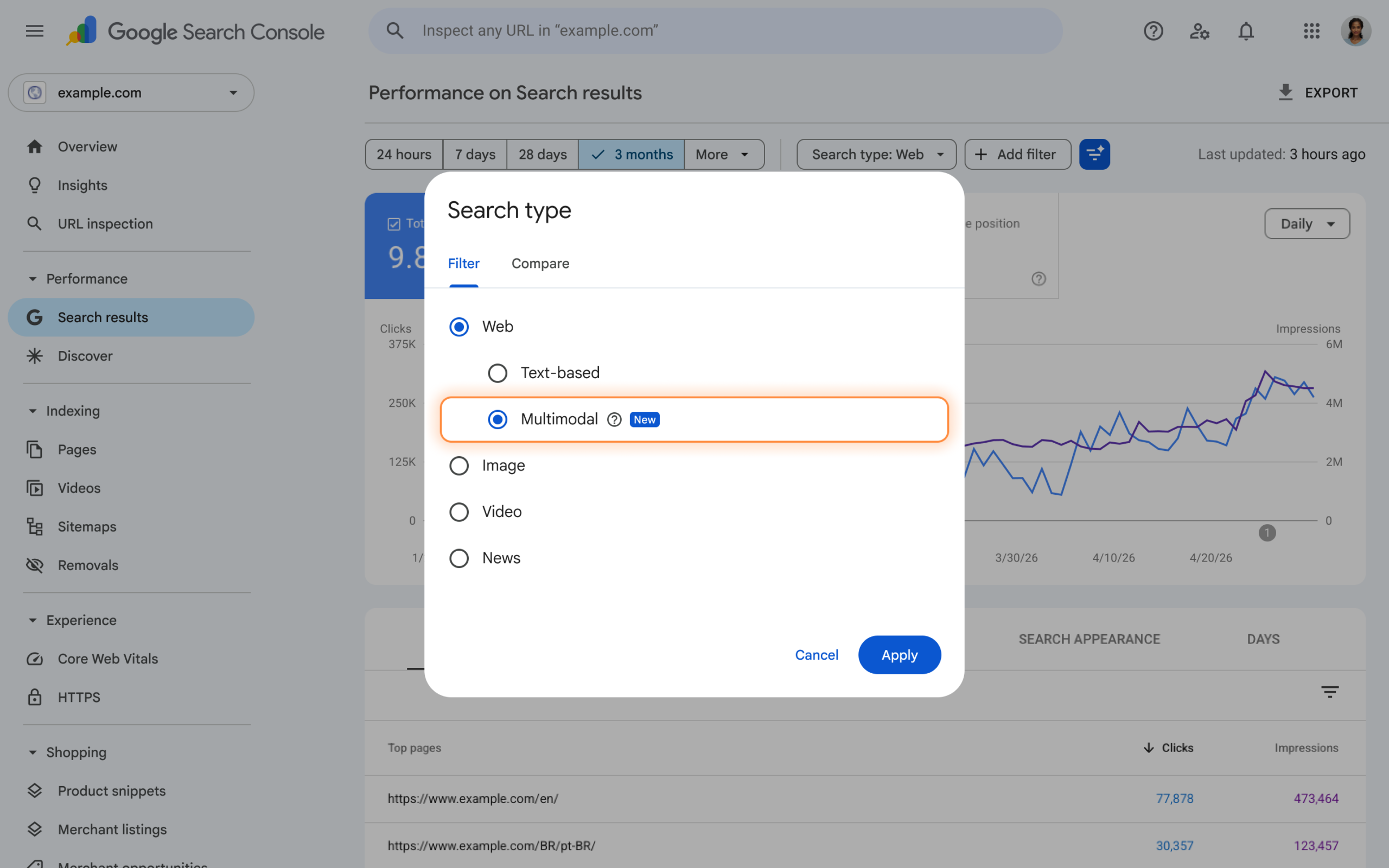
Rather than treating all search activity as one category, the new reporting allows users to identify multimodal search activity through a dedicated search type filter.
This can make performance analysis more useful for websites that receive visibility through images and other visual search interactions.
The update also gives publishers a practical way to export the information. Users can download their performance data and analyze it through other tools.
That can be particularly useful for larger websites that combine Search Console data with analytics platforms, SEO software, reporting dashboards, or internal databases.
Which Search Experiences Are Included?
The new multimodal reporting covers several visual search experiences.
These include:
- Google Lens
- Circle to Search on Android
- Image uploads to Google Search
- Chrome’s right-click “Search this image” feature
Each experience allows users to search in a way that differs from traditional keyword-based queries.
Google Lens
Google Lens allows users to search using visual information captured through a camera or an existing image.
A person can use Lens to identify objects, explore products, find related information, or discover webpages connected to an image.
For publishers, Lens can create another path through which users discover online content.
Circle to Search
Circle to Search on Android allows users to select visual content directly on their device and search for related information.
The experience reduces the need to manually describe what appears on a screen.
This can make visual discovery faster and more intuitive.
Image Uploads
Users can also upload images directly to Google Search.
The search engine can use the visual information to identify relevant results and provide additional information.
Websites with useful, well-structured content may appear as part of these results when Google determines that their pages are relevant.
Chrome Image Search
Chrome users can search an image directly by right-clicking it and selecting the relevant search option.
This creates another route between visual content and search results.
Together, these experiences demonstrate how search behavior continues to expand beyond typed queries.
How Can Publishers Access Multimodal Search Data?
Publishers can access the new information through Search Console performance reports.
The key step involves using the new multimodal search type filter.
This filter allows users to isolate performance data connected to web multimodal searches.
Once the filter is applied, publishers can review the available performance information and identify how their content performs through these visual search experiences.
The process is similar to analyzing other search performance categories, but the new filter provides a specific view of multimodal activity.
This can help website owners understand whether visual search contributes to their overall organic visibility.
Can You Export Multimodal Search Data?
Yes. Search Console allows users to export the performance data.
After reviewing the multimodal search information, users can select the Export option to download the data.
Exporting the information can make deeper analysis easier.
SEO teams can combine the data with other datasets to investigate trends, compare periods, identify important pages, or monitor changes in search visibility.
For larger publishers, exported Search Console data can also support internal reporting.
Teams can connect search performance information with content databases, traffic reports, business metrics, and SEO dashboards.
This makes the new reporting more useful than simply viewing individual numbers inside Search Console.
How Could This Change SEO Reporting?
The introduction of multimodal reporting can add another dimension to SEO analysis.
Historically, many SEO reports focused heavily on keywords, rankings, clicks, impressions, and text-based search queries.
Visual search introduces different user behaviors.
Someone may discover a webpage without typing the exact phrase associated with that content. Instead, they may begin with a photograph, screenshot, product image, or object captured through a smartphone camera.
That means publishers need to consider how their content works in visual discovery environments.
SEO reporting can now include multimodal search performance alongside other search data.
This may help teams understand which pages attract visibility through visual search and whether that visibility results in clicks.
The information can also support broader discussions about image optimization, structured content, page relevance, and user intent.
Why Does Visual Search Matter for Website Owners?
Visual search can help users find information when they do not know the right words to use.
Consider someone looking at an unfamiliar product. They might not know its brand or model number. A photograph can provide enough information to begin the search.
The same principle applies to objects, clothing, locations, plants, artwork, products, and many other subjects.
For website owners, this means content can potentially reach users through visual discovery even when those users start with an image rather than a keyword.
This makes visual assets increasingly relevant to organic search strategies.
However, publishers still need useful content behind those visual experiences. A strong image alone does not guarantee visibility or traffic.
Relevant webpages, accurate information, clear context, and useful supporting content remain important for helping search engines understand what a page provides.
How Does Multimodal Search Support Generative AI Search?
The new reporting also extends into Google’s reporting for Generative AI features.
This connection is important because modern search increasingly combines traditional results with AI-generated experiences.
Users can discover information through different search interfaces, including visual and AI-powered experiences.
By including multimodal activity within performance reporting, Search Console gives publishers more information about how their content appears across these evolving search environments.
For SEO professionals, this creates an opportunity to study search performance from a broader perspective.
Instead of analyzing only traditional keyword rankings, teams can examine how users discover content through different interaction types.
This broader approach can help publishers better understand the changing search journey.
What Should SEO Teams Monitor?
SEO teams can use the new data to investigate several areas.
Impressions
Impressions can show how often content appears in relevant multimodal search experiences.
Tracking this metric over time may help identify changes in visual search visibility.
Clicks
Clicks can indicate whether users move from visual search results to a website.
Comparing clicks with impressions can provide additional context about user engagement.
Pages
Teams can examine which webpages receive multimodal search visibility.
This can reveal whether particular content types perform better in visual discovery.
Search Trends
Regular monitoring can help identify changes in multimodal search activity.
Teams may compare different periods to determine whether visual search contributes more or less to overall search performance.
Exported Data
Exported reports can support deeper analysis outside Search Console.
SEO teams can combine the information with other reporting systems to build a broader picture of organic performance.
Does Multimodal Search Change Content Strategy?
Multimodal search can influence how publishers think about content.
Text remains important, but visual elements can also help users discover and understand information.
Publishers may therefore need to consider whether their pages contain useful images that clearly support the topic.
Image context matters as well. Search engines need signals that help them understand what an image represents and how it relates to the surrounding webpage.
For example, an article about a product can use relevant product images alongside detailed descriptions. A travel page can use photographs that support information about a destination. A recipe page can use images that correspond to the preparation process.
The goal is not to add images simply for SEO. Visual content should provide genuine value to users.
As search becomes more multimodal, publishers can benefit from creating pages that work well for both text-based and visual discovery.
What Does This Mean for Google News Publishers?
Publishers working with Google news and other content discovery channels should pay attention to how users find their content across search experiences.
News and publishing websites often produce large volumes of content, making performance analysis particularly important.
A multimodal search report can provide additional information about how visual search contributes to content discovery.
For publishers, this can support decisions about image selection, article structure, visual assets, and broader search optimization.
However, multimodal reporting does not replace the need for strong editorial content.
Useful, relevant, and clearly presented information remains central to helping users discover and understand a webpage.
How Can Websites Prepare for Multimodal Search?
Websites can prepare by making their content useful for different types of search behavior.
A few practical areas deserve attention:
Use Relevant Images
Images should support the subject of the page rather than exist only as decorative elements.
Provide Clear Context
Surrounding text should explain what an image or visual element represents.
Maintain Strong Page Quality
A visual search result should lead users to a page that answers their needs clearly.
Organize Content Properly
Clear headings, descriptions, and logical page structures help both users and search systems understand content.
Monitor Search Console
Regular reporting can reveal how content performs across different search experiences.
These practices support a broader SEO strategy without treating multimodal search as a completely separate discipline.
What Is the Future of Search Performance Reporting?
Search performance reporting is moving toward a broader understanding of how users interact with search.
Traditional keyword searches remain important, but users now have more ways to discover information.
They can type a question, speak a query, upload an image, use a camera, select something on their screen, or interact with AI-powered search experiences.
Each behavior can provide a different path to online content.
For publishers, better reporting can make these paths easier to understand.
The new multimodal reporting in Search Console represents one step toward giving website owners more visibility into these changing search behaviors.
As search technology continues to develop, performance analysis will likely need to account for increasingly diverse user interactions.
Frequently Asked Questions
What is multimodal search?
Multimodal search allows users to search using visual information such as images, camera input, or selected content instead of relying only on typed queries.
Where can I find multimodal search data?
You can access the data through the performance reports in Search Console by using the multimodal search type filter.
Which Google tools are included in multimodal search reporting?
The reporting includes Google Lens, Circle to Search on Android, image uploads to Google Search, and Chrome’s right-click image search feature.
Can multimodal search data be exported?
Yes. Search Console provides an Export option that allows users to download the available performance data for further analysis.
Why should publishers monitor visual search?
Monitoring visual search can help publishers understand another way users discover their content and identify how their pages perform across evolving search experiences.
Is multimodal search part of Generative AI reporting?
Yes. The new reporting is available in the Search results performance report and the report for Generative AI features.
Conclusion
Search is no longer limited to users typing keywords into a search box. Visual tools such as Google Lens, Circle to Search, image uploads, and Chrome’s image search feature are creating new ways for people to discover online information.
The new Search Console reporting gives publishers greater visibility into this activity. By using the multimodal search type filter, website owners can examine performance data connected to these visual search experiences and export that information for deeper analysis.
For Google news publishers, SEO teams, and other website owners, this development adds another layer to search performance reporting. It can help teams understand how content reaches users across different search journeys.
The key takeaway is simple: search behavior is becoming more diverse, and performance measurement needs to evolve with it. Publishers that understand where their audience discovers content can make more informed decisions about their content, visual assets, and search strategy.
